
Angel Investor Simulator immerses you in the world of business and investment, where you take on the role of an angel investor aiming to create a profitable portfolio. The game provides a realistic look into the investments required to grow a successful business, but it’s not just about having capital—strategy plays a critical role. Beginners often find themselves overwhelmed by the breadth of choices and decisions that impact their success.
New players will benefit greatly from understanding the layers of strategy in managing investments without spreading themselves too thin. It’s essential to balance your financial resources and smart decision-making. This guide offers practical tips to ensure you maximize your experience and successes in Angel Investor Simulator.
Before diving into investments, ensure you have a clear grasp of startup research, negotiation skills, and how to effectively use your experts. This foundational knowledge will set you up for a much smoother journey.
The key to success in this game is not simply having a lot of money. There are several things you need to keep in mind, and managing everything can quickly become overwhelming. So, for beginners, we have put together a tips and tricks guide to help them get started and have the best possible experience in Angel Investor Simulator.
- Research Every Startup Before Investing
- Negotiate Aggressively During Investment Deals
- Build a Team of Experts and Allocate Them Intelligently
- Monitor Competitors and Adjust Your Pricing
- Invest in Marketing, PR, and Sales
- Prepare for IPOs and Understand the Stock Exchange
Research Every Startup Before Investing Committing money to a startup without understanding its potential is a classic rookie mistake. Utilize your available experts to conduct thorough due diligence before you invest. This step is crucial, as both you and your advisors need to feel confident in the startup’s prospects. Your next focus should be on analyzing the startup’s initial parameters, weaknesses, and possible improvements. Even if a startup has a compelling idea, it might struggle due to poor product quality or ineffective sales strategies. Comparing various investment opportunities will further enhance your decision-making.
Negotiate Aggressively During Investment Deals
Negotiation is a critical part of securing your investment in the game’s competitive landscape. Remember, it’s not always necessary to win every deal; sometimes letting others secure a deal is wiser, especially if they’re outbidding you significantly.
Focus on establishing a positive relationship between your investment and the ownership percentage you receive. It’s vital to secure valuable deals without depleting your capital excessively. A larger share in a thriving company can yield higher returns, but it requires the business to perform well.
Once this process is complete, pay attention to the company’s starting parameters, weaknesses, and areas where improvements could make a meaningful difference. A startup might have an exciting concept, but it can still struggle because of poor product quality, weak sales, or an inability to compete with other businesses. Another thing to keep in mind is that you should compare different investment opportunities before settling on one.
Build a Team of Experts and Allocate Them Intelligently Your team of experts is one of your most valuable assets. The game lets you assign advisors to improve the parameters of the startups effectively. How you allocate these resources can significantly influence success. Instead of randomly assigning experts, think strategically about the specific weaknesses of each startup. A company facing quality issues will require different support than one struggling with sales. Matching each expert’s strength with the startup’s needs can enhance your investment outcomes.
Investment negotiations are an important part of the game, as different angels compete against each other to secure stakes in startups. You do not have to treat every opportunity as something you absolutely must win.
It is perfectly fine to let other investors win a deal. If another investor is offering significantly more money than you, it may not be worth increasing your offer just to secure the investment.
Instead, focus on the relationship between the amount you invest and the ownership percentage you receive. Your aim should be to secure a worthwhile deal without using up an excessive amount of your available capital. Keep in mind that owning a larger percentage of a successful business can generate greater returns, but only if the company performs well.
Monitor Competitors and Adjust Your Pricing Pricing strategy can greatly affect a startup’s market share. Regularly evaluate how your product’s pricing stacks up against competitors. Set prices too high, and you risk making competitors’ offerings look more appealing; set them too low, and you could compromise your profit margins. It’s not mandatory to always be the lowest-cost option. Assess your product quality and market position; if your startup offers superior quality, higher prices may be justifiable. But if competitors have similar products at lower rates, re-evaluating your pricing strategy is essential.
Your experts are among the most important resources available to you. The game allows you to assign advisors to startups to improve their starting parameters and help them find the right customers for their products. So, one of the major tips we can give you for Angel Investor Simulator is to think carefully about which companies should receive your best people.
Rather than distributing your experts randomly, consider the specific weaknesses of each startup. A company struggling with product quality needs different support from one struggling with sales or marketing.
Your objective should be to match each expert’s capabilities with the business’s needs. This might sound a little challenging at first, but once you get the hang of it, the process will become much easier.
So, don’t overthink it when you’re just starting out.
Monitor Competitors and Adjust Your Pricing
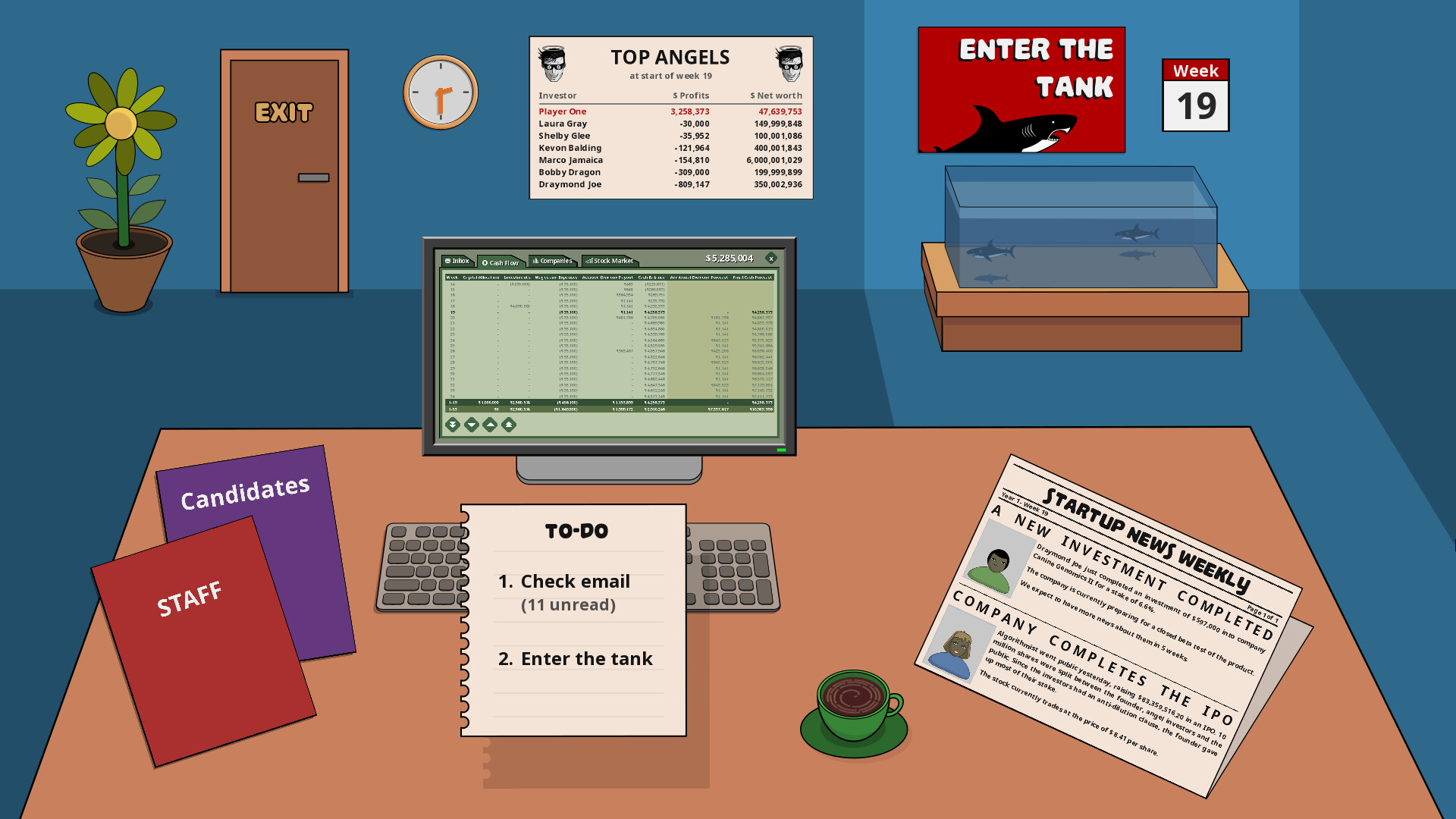
Pricing is another factor that affects market share. You should regularly consider how your startup’s prices compare with those of competing businesses.
Setting a price too high could make competitors’ products look more attractive to customers. On the other hand, setting it too low might make your product more appealing, but it could also significantly reduce your profit margins.
So, you will need to find the right balance.
You don’t have to choose the lowest price. Instead, consider your product’s quality and your position in the market compared to competitors.
If your startup offers a higher-quality product, charging a higher price may be justified. However, if competitors are offering similar products at lower prices, you may need to adjust your pricing strategy to remain competitive.
Invest in Marketing, PR, and Sales Both marketing and PR are essential for driving customer attraction and increasing market share. However, don’t prioritize one over the others—balancing marketing, sales, and PR is key for competitive advantage. As you assign experts, understand which area needs the most improvement. If the product is competitive but attracting customers is an issue, marketing should take precedence. Conversely, if there’s interest but poor sales performance, focus on enhancing sales strategy. Recognizing where each business needs support allows for more effective expert utilization.
Marketing and PR are important because they help your startups attract customers and capture market share. However, marketing should not be your only priority. One of the major tips we can give you in Angel Investor Simulator is to focus on marketing, sales, and PR together, as all three play an important role in helping a business compete effectively.
When assigning experts, consider which of these areas is holding a particular company back. For example, if the product is already competitive but the business is struggling to attract customers, marketing might deserve more attention.
Similarly, if customers are interested in the product but sales performance is poor, improving sales capabilities would be a better approach. Understanding where a business needs the most support will help you make better use of your available experts.
Prepare for IPOs and Understand the Stock Exchange An IPO represents a crucial milestone, allowing you to trade shares once the company goes public. It creates opportunities to manage investments and potentially realize profits, but don’t rush to sell your entire stake just because there’s a public offering. Evaluate the company’s performance, future prospects, and the value of your remaining shares. Selling can recoup your original investment or secure profits, while holding onto shares allows you to retain a stake in the company’s ongoing success. Always take the time to consider the situation before deciding to sell after an IPO.
An IPO is an important milestone because the game allows you to trade company shares on the stock exchange after a business goes public. This creates another opportunity to manage your investments and potentially realise profits. However, don’t assume that every IPO is an automatic reason to sell your entire stake.
You need to consider several things, including the company’s performance, its future prospects, and the value of your remaining shares. Selling can help you recover your original investment or secure a profit, while holding on to your shares allows you to maintain your stake in the company’s future performance. Take the time to evaluate each opportunity before making a decision, rather than rushing to sell simply because a company has gone public.
That’s a wrap on the essential tips for beginners in Angel Investor Simulator. May these insights assist you in navigating the intricacies of investment management and enhance your overall gaming experience.
Explore more gaming tips and strategies for other great titles in the gaming world!
Obaid Ur Rehman is an avid gamer with a passion for writing about the gaming industry. While he enjoys exploring many genres, his expertise lies in RPGs and Soulslike games.
After challenging intense gameplay, he loves to switch gears and dive into cozy games. Outside of gaming, he enjoys anime, binge-watching series, and hitting the gym for a workout.