
When choosing the best ride in Over the Hill, you have to look well beyond raw engine power. Tyre grip, wheel size, and suspension travel dictate whether you glide smoothly over jagged rocks or get stuck halfway up a mountain.
This over the hill vehicles tier list breaks down all 21 available trucks by their off-road stats and exact unlock locations. Trust me, grabbing the right rig early saves you from endless frustration on brutal mountain trails.
We will cover individual tier rankings, class differences like torque and winch strength, and the core stats that actually matter when the terrain gets nasty.
The Mammoth and Marshal sit comfortably at the top, while the Blast Wagon and Boar serve as phenomenal mid-game alternatives before you reach the endgame zones. Keep in mind that stock upgrades will not fix a truck with poor baseline tyres.
Over the Hill Vehicles Tier List
Off-road performance on rough trails depends almost entirely on three physical attributes. Vehicles with higher numbers in tyre grip, wheel radius, and suspension travel naturally dominate these rankings.
| Tier | Vehicles | Why They Rank Here |
|---|---|---|
| S Tier | Mammoth, Marshal | Best tyres, largest wheels, and 70 cm suspension |
| A Tier | Blast Wagon, Boar | Excellent grip and good climbing ability |
| B Tier | Wombat, Protector, Trailrat, Brick, Bull v1, Tinny, Trail Burner, Cumbre | Good balance of grip, suspension, and handling |
| C Tier | Roamer, Ding, Woodman, Grand Woodman, Burro, Timberbox | Smaller wheels, limited suspension, or weaker tyres |
| D Tier | Lynx, Rust Ox | Poorer performance in key off-road areas |
| F Tier | Polyana | Small tyres, tiny wheels, and limited suspension |
Best Vehicles in Over the Hill
S Tier: Mammoth and Marshal
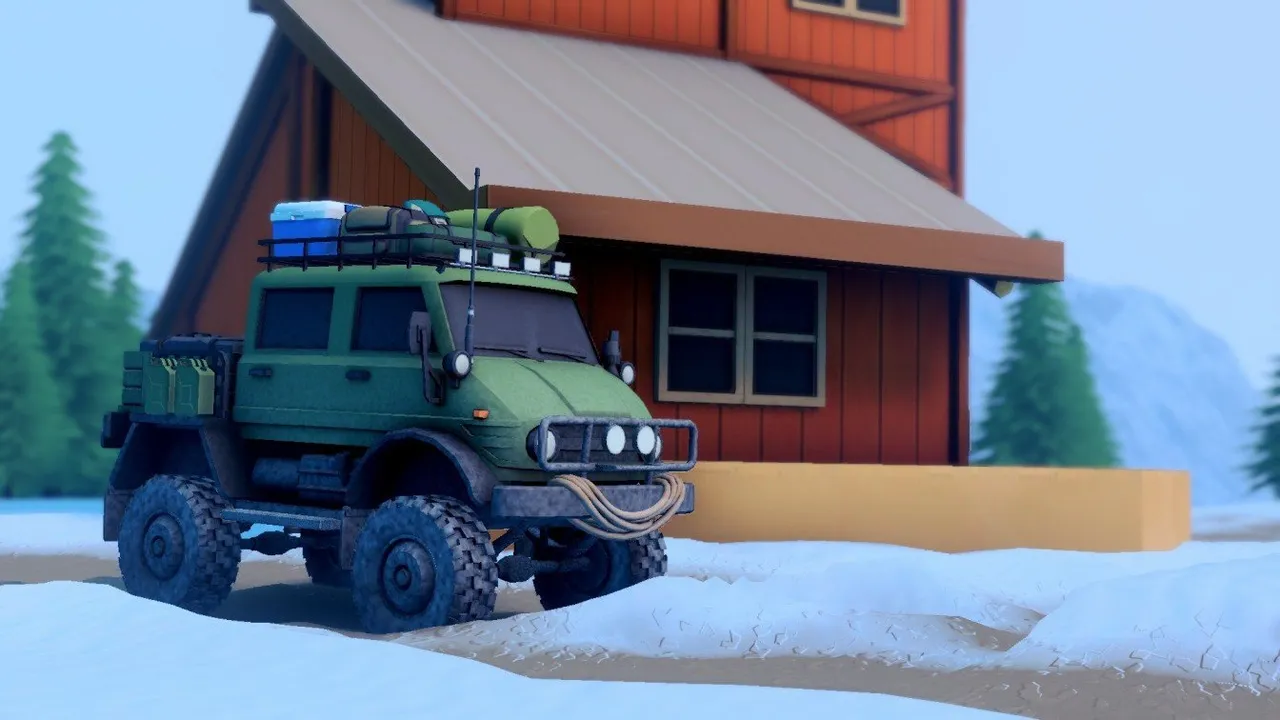
The Mammoth and Marshal represent absolute peak performance for treacherous off-road expeditions. Both feature massive tyres offering 1.30 forward grip, 0.52 m wheels, and a generous 70 cm of suspension travel.
Belonging to the Expedition class also grants them massive torque and the strongest winches in the game. Their primary drawback is a wider turning radius compared to lightweight Trail vehicles.
The Mammoth features a slightly shorter wheelbase and includes a handy cargo bed. Aside from that physical layout difference, both machines share identical core performance stats.
- Mammoth unlock: Lower Midgar Trail, Asgard Mountain
- Marshal unlock: Shabah Ascent, Tassili n’Ajjer Desert
A Tier: Blast Wagon and Boar
The Blast Wagon and Boar are your best companions before you gain access to heavy Expedition trucks. They match the S-tier beasts with a stellar 1.30 forward grip rating.
Their main limitation is suspension travel, capping out at 45 cm instead of the luxurious 70 cm found on top-tier rigs.
The Boar is nearly a metre shorter than its counterpart, making it much easier to squeeze through tight rock formations. Meanwhile, the Blast Wagon compensates with slightly larger wheels and a rear cargo bed.
- Blast Wagon unlock: Windcall Gorge Trail, Gimli Ridge
- Boar unlock: Tarfa Ascent, Tassili n’Ajjer Desert
B Tier: Balanced Vehicles for General Trails
Most standard Trail vehicles land right here in the middle of the pack. They feature 1.10 forward grip, 55 cm of suspension, and a nimble 1,600 kg chassis with a 38-degree steering angle.
The Wombat edges ahead of other Trail options thanks to its larger 0.43 m wheels. Models like the Protector, Trailrat, Brick, Bull v1, and Tinny all share uniform grip and suspension numbers.
The Trail Burner and Cumbre represent the Wagon class here, bringing higher top speeds, increased torque, and 0.44 m wheels to the table.
- Wombat: Larger wheels than standard Trail rivals.
- Protector: A reliable starting option with dependable stats.
- Trail Burner: Excellent wheel size paired with higher Wagon class top speed.
- Cumbre: Direct alternative offering matching performance to the Trail Burner.
C Tier: Vehicles With Noticeable Weaknesses
These machines remain functional on standard dirt roads, but specific stat penalties hold them back from greatness.
Roamer : Features standard 1.10 grip and 0.42 m wheels without standout bonuses. Ding : Suffers from a restricted 45 cm suspension travel limitation. Woodman and Grand Woodman : Both are bottlenecked by small 0.38 m wheels. Burro and Timberbox : Heavy Workhorse chassis weighing 2,800 kg with basic tyres.
While heavy Workhorses like the Burro pack decent torque, their baseline tyre grip simply cannot compete on steep rock crawls.
D Tier: Lynx and Rust Ox
The Lynx suffers from the worst suspension travel in its class at just 35 cm. Combined with standard tyres, it offers very few perks over default options.
The Rust Ox presents an odd inverse problem with 60 cm of suspension paired to weak 0.95 forward grip tyres. It can crawl over rocks, but low traction makes it tough to recommend.
F Tier: Polyana
The Polyana anchors the bottom of the list due to an unfortunate combination of weak tyres, tiny wheels, and cramped suspension.
Its 0.95 forward grip, 0.35 m wheel radius, and 40 cm suspension leave it severely outmatched on demanding climbs. Look elsewhere if you need a dependable hill climber.
All 21 Over the Hill Vehicles: Stats and Unlock Locations
Review the comprehensive reference chart below to compare exact grip ratings, wheel measurements, and world locations for every truck.
Grip values are listed as forward over sideways measurements. Wheel radius is recorded in metres and suspension travel uses centimetres.
| Detail | Info |
|---|---|
| Mammoth | Expedition / 1.30 / 1.27 / 0.52 m / 70 cm / Lower Midgar Trail — Asgard Mountain |
| Marshal | Expedition / 1.30 / 1.27 / 0.52 m / 70 cm / Shabah Ascent — Tassili n’Ajjer Desert |
| Blast Wagon | Workhorse / 1.30 / 1.27 / 0.48 m / 45 cm / Windcall Gorge Trail — Gimli Ridge |
| Boar | Workhorse / 1.30 / 1.27 / 0.46 m / 45 cm / Tarfa Ascent — Tassili n’Ajjer Desert |
| Wombat | Trail / 1.10 / 1.24 / 0.43 m / 55 cm / El Kalaa North Ascent — Tassili n’Ajjer Desert |
| Protector | Trail / 1.10 / 1.24 / 0.40 m / 55 cm / Starting vehicle |
| Trailrat | Trail / 1.10 / 1.24 / 0.40 m / 55 cm / Starting vehicle |
| Brick | Trail / 1.10 / 1.24 / 0.40 m / 55 cm / Bridal Veil Falls Climb — Gimli Ridge |
| Bull v1 | Trail / 1.10 / 1.24 / 0.40 m / 55 cm / Blanshard Ridge Trail — Asgard Mountain |
| Tinny | Trail / 1.10 / 1.24 / 0.40 m / 55 cm / Ukhtayn Route — Aurès Mountains |
| Trail Burner | Wagon / 1.10 / 1.24 / 0.44 m / 50 cm / Windy Joe Trail — Emerald Lake |
| Cumbre | Wagon / 1.10 / 1.24 / 0.44 m / 50 cm / Jazira Ascent — Aurès Mountains |
| Roamer | Wagon / 1.10 / 1.24 / 0.42 m / 50 cm / Kalaa Ulya Track — Aurès Mountains |
| Ding | Trail / 1.10 / 1.24 / 0.40 m / 45 cm / Starting vehicle |
| Woodman | Wagon / 1.10 / 1.24 / 0.38 m / 50 cm / El Kalaa South Ascent — Tassili n’Ajjer Desert |
| Grand Woodman | Wagon / 1.10 / 1.24 / 0.38 m / 50 cm / Asulkan Lake Highline — Asgard Mountain |
| Burro | Workhorse / 1.10 / 1.24 / 0.40 m / 45 cm / Hermit Trail — Emerald Lake |
| Timberbox | Workhorse / 1.10 / 1.24 / 0.40 m / 45 cm / Midgar Ascent — Asgard Mountain |
| Lynx | Trail / 1.10 / 1.24 / 0.40 m / 35 cm / Mahrouqa West Track — Aurès Mountains |
| Rust Ox | Workhorse / 0.95 / 1.16 / 0.36 m / 60 cm / Waddington Scree Trail — Gimli Ridge |
| Polyana | Trail / 0.95 / 1.16 / 0.35 m / 40 cm / Elvis Rim Trail — Gimli Ridge |
Vehicle Class Stats: Torque, Speed, and Winch Strength
Every model inside a specific vehicle class shares baseline statistics. Engine upgrades increase available torque, but they never alter inherent tyre grip, wheel radius, or suspension specs.
| Vehicle | Class | Grip | Wheel Radius | Suspension | Unlock Location |
|---|---|---|---|---|---|
| Mammoth | Expedition | 1.30 / 1.27 | 0.52 m | 70 cm | Lower Midgar Trail — Asgard Mountain |
| Marshal | Expedition | 1.30 / 1.27 | 0.52 m | 70 cm | Shabah Ascent — Tassili n’Ajjer Desert |
| Blast Wagon | Workhorse | 1.30 / 1.27 | 0.48 m | 45 cm | Windcall Gorge Trail — Gimli Ridge |
| Boar | Workhorse | 1.30 / 1.27 | 0.46 m | 45 cm | Tarfa Ascent — Tassili n’Ajjer Desert |
| Wombat | Trail | 1.10 / 1.24 | 0.43 m | 55 cm | El Kalaa North Ascent — Tassili n’Ajjer Desert |
| Protector | Trail | 1.10 / 1.24 | 0.40 m | 55 cm | Starting vehicle |
| Trailrat | Trail | 1.10 / 1.24 | 0.40 m | 55 cm | Starting vehicle |
| Brick | Trail | 1.10 / 1.24 | 0.40 m | 55 cm | Bridal Veil Falls Climb — Gimli Ridge |
| Bull v1 | Trail | 1.10 / 1.24 | 0.40 m | 55 cm | Blanshard Ridge Trail — Asgard Mountain |
| Tinny | Trail | 1.10 / 1.24 | 0.40 m | 55 cm | Ukhtayn Route — Aurès Mountains |
| Trail Burner | Wagon | 1.10 / 1.24 | 0.44 m | 50 cm | Windy Joe Trail — Emerald Lake |
| Cumbre | Wagon | 1.10 / 1.24 | 0.44 m | 50 cm | Jazira Ascent — Aurès Mountains |
| Roamer | Wagon | 1.10 / 1.24 | 0.42 m | 50 cm | Kalaa Ulya Track — Aurès Mountains |
| Ding | Trail | 1.10 / 1.24 | 0.40 m | 45 cm | Starting vehicle |
| Woodman | Wagon | 1.10 / 1.24 | 0.38 m | 50 cm | El Kalaa South Ascent — Tassili n’Ajjer Desert |
| Grand Woodman | Wagon | 1.10 / 1.24 | 0.38 m | 50 cm | Asulkan Lake Highline — Asgard Mountain |
| Burro | Workhorse | 1.10 / 1.24 | 0.40 m | 45 cm | Hermit Trail — Emerald Lake |
| Timberbox | Workhorse | 1.10 / 1.24 | 0.40 m | 45 cm | Midgar Ascent — Asgard Mountain |
| Lynx | Trail | 1.10 / 1.24 | 0.40 m | 35 cm | Mahrouqa West Track — Aurès Mountains |
| Rust Ox | Workhorse | 0.95 / 1.16 | 0.36 m | 60 cm | Waddington Scree Trail — Gimli Ridge |
| Polyana | Trail | 0.95 / 1.16 | 0.35 m | 40 cm | Elvis Rim Trail — Gimli Ridge |
Detail Info Trail Class 1,600 kg / 100 Nm stock / 34 km/h / 38° steering / 25 kN winch Wagon Class 2,000 kg / 125 Nm stock / 36 km/h / 33° steering / 32 kN winch Workhorse Class 2,800 kg / 175 Nm stock / 29 km/h / 28° steering / 44 kN winch Expedition Class 3,200 kg / 200 Nm stock / 27 km/h / 28° steering / 51 kN winch
Which Vehicle Class Should You Choose?
- Trail: Perfect for tight hairpins due to light mass and sharp steering angles.
- Wagon: Ideal when you need a balance of speed and agility, hitting 36 km/h at Stage 3.
- Workhorse: Delivers massive winch power and torque at the cost of extra weight.
- Expedition: The definitive choice for brutal climbs thanks to 51 kN winch power and immense torque.
| Class | Mass | Torque (Stock / Stage 2 / Stage 3) | Top Speed (Stage 3) | Steering | Winch |
|---|---|---|---|---|---|
| Trail | 1,600 kg | 100 / 106 / 112 Nm | 34 km/h | 38° | 25 kN |
| Wagon | 2,000 kg | 125 / 138 / 151 Nm | 36 km/h | 33° | 32 kN |
| Workhorse | 2,800 kg | 175 / 190 / 207 Nm | 29 km/h | 28° | 44 kN |
| Expedition | 3,200 kg | 200 / 227 / 256 Nm | 27 km/h | 28° | 51 kN |
What Makes One Vehicle Better Than Another?
Evaluating off-road performance relies heavily on three core physical attributes.
1. Tyre Grip
Tyre traction dictates performance more than any other attribute. Premium tyres deliver 1.30 forward grip, standard ones provide 1.10, and weak variants drop to 0.95.
This variance becomes critical on loose mud or steep gravel where traction decides if you advance or spin in place.
2. Wheel Radius
Larger wheels allow trucks to roll cleanly over protruding ledges and rocks. The Mammoth and Marshal boast massive 0.52 m wheels, while the Polyana struggles on tiny 0.35 m rims.
Even trucks sharing identical tyre ratings can perform wildly differently simply due to differences in wheel diameter.
3. Suspension Travel
Ample suspension travel keeps your tyres planted firmly against undulating terrain. Greater travel translates to consistent traction across rough patches.
Expedition rigs lead the category with 70 cm of travel, whereas the Lynx lags behind with a meager 35 cm.
3. Suspension Travel
Suspension helps keep the wheels in contact with the ground as the vehicle moves over bumps and rocks. More suspension travel generally helps on uneven routes.
The Mammoth and Marshal lead with 70 cm, while the Lynx has just 35 cm. The Rust Ox has 60 cm of travel, but its small tyres limit its overall performance.
Do Vehicle Upgrades Change the Tier List?
Upgrades provide the same improvements to every vehicle, so they do not change the relative rankings in this list. A Stage 3 engine gives each class more torque, but it does not fix a vehicle’s weaker tyres or smaller wheels.
Vehicle upgrades also do not carry over when you switch to a new truck. Keep that in mind before spending your Pebbles on a vehicle you plan to replace soon.
The rankings are based on the game’s launch version from October 14, 2026. A future patch could change the results. The Ding, for example, has already received a lower centre of mass, which may reduce its tendency to roll over.
The available stats also do not cover everything that affects driving, including rollover risk and ground clearance. Treat the tier list as a performance comparison rather than a guarantee that every vehicle will handle every route the same way.